

When choosing a leather watch strap, most attention naturally goes to the material, colour and stitching. Yet there is another detail that deserves just as much consideration: the shape of the strap where it meets the watch case.
Although relatively small, the profile of a strap end can have a considerable influence on the overall appearance of a watch. A gently curved outline can create a softer, more traditional impression, while straighter lines and angular transitions can introduce a more contemporary character.
These differences are particularly interesting because they do not require changing the leather or colour of the strap. Simply altering its silhouette can create an entirely different visual relationship between the strap and the timepiece.
At Roiberd Atelier, four strap end profiles are available when creating a custom watch strap: Ogive, Rounded, Chamfered and Trapezoid.
Each offers a distinct interpretation of this often-overlooked detail. Understanding their differences can help you choose a configuration that complements the proportions and personality of your watch.
1. Why Strap Ends Matter
The point where a strap meets the watch case is one of the most important visual transitions in the entire design.
The shape of the end determines how the leather approaches the lugs and how its outline interacts with the proportions of the case.
A rounded profile can soften the overall appearance, while a more angular silhouette may introduce definition and contrast. A pointed profile creates a different sense of direction, whereas a flatter, geometric finish can give the strap a more architectural quality.
These differences are subtle, but they become particularly noticeable when looking at a watch from above.
It is also worth remembering that the strap end should be considered alongside the lug width and the geometry of the watch case. The correct dimensions remain essential for a proper fit; the profile is an additional design decision that influences the finished appearance.
Ultimately, the most successful choice is one that feels naturally connected to the watch rather than competing with its design.
2. The Four Roiberd Strap End Profiles
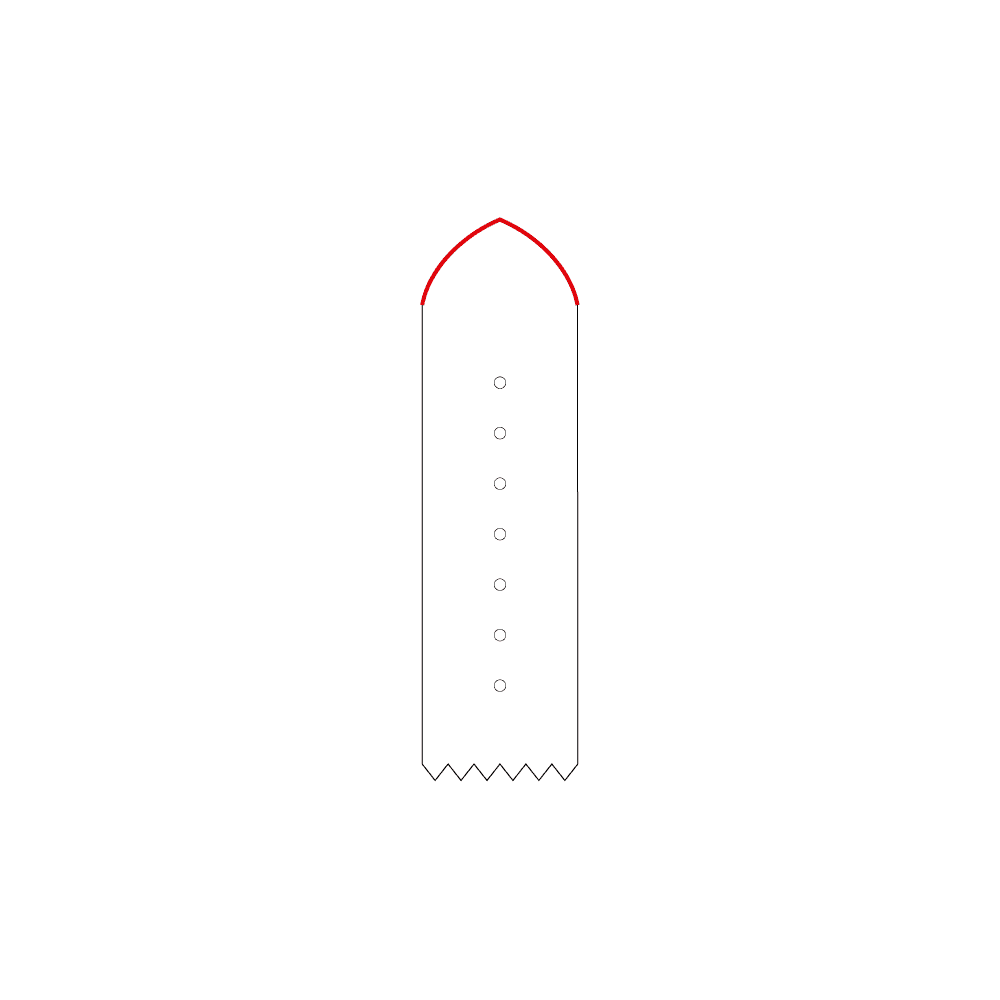
Ogive
The Ogive profile features a gently rising, pointed silhouette, with curved sides that converge towards a central tip.
Its shape is reminiscent of the architectural curves found in classical design, giving it a distinctive and somewhat elegant character.
Unlike a simple rounded end, the Ogive introduces a more pronounced central point. This creates a sense of direction and gives the strap a slightly more elongated visual finish.
It can be an interesting choice for dress watches, vintage timepieces and designs where a little more individuality is desired without introducing excessive geometric detailing.
The Ogive profile is particularly appealing when the intention is to create a strap that feels considered and distinctive while retaining a traditional sense of refinement.
Choose Ogive if you appreciate:
- A pointed, gently curved silhouette.
- Classical and architectural influences.
- A more distinctive alternative to conventional rounded profiles.
- Elegant designs with a subtle sense of individuality.
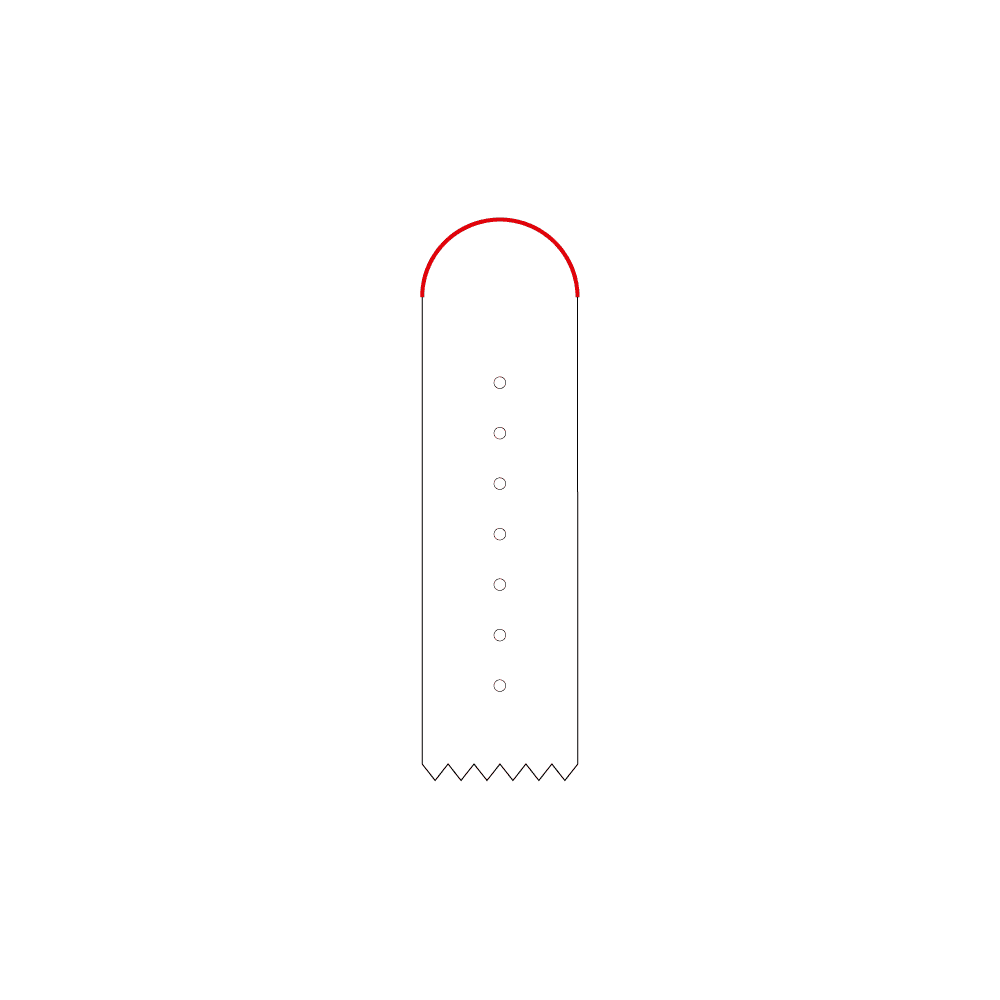
Rounded
The Rounded profile is characterised by its smooth, semicircular finish.
Its simplicity gives it a naturally balanced appearance, with no sharp transitions or pronounced angles. The result is a soft and familiar silhouette that works particularly well with watches featuring rounded cases and traditional proportions.
There is something reassuring about this shape. It does not attempt to introduce unnecessary visual complexity, allowing the leather, colour and other details of the strap to remain the focus.
For this reason, Rounded is an especially versatile option for classic dress watches, vintage timepieces and everyday watches with softer design language.
It is perhaps the most understated of the four profiles.
Choose Rounded if you appreciate:
- A smooth and symmetrical finish.
- Soft, flowing lines.
- A timeless and understated appearance.
- Versatility across different watch styles.
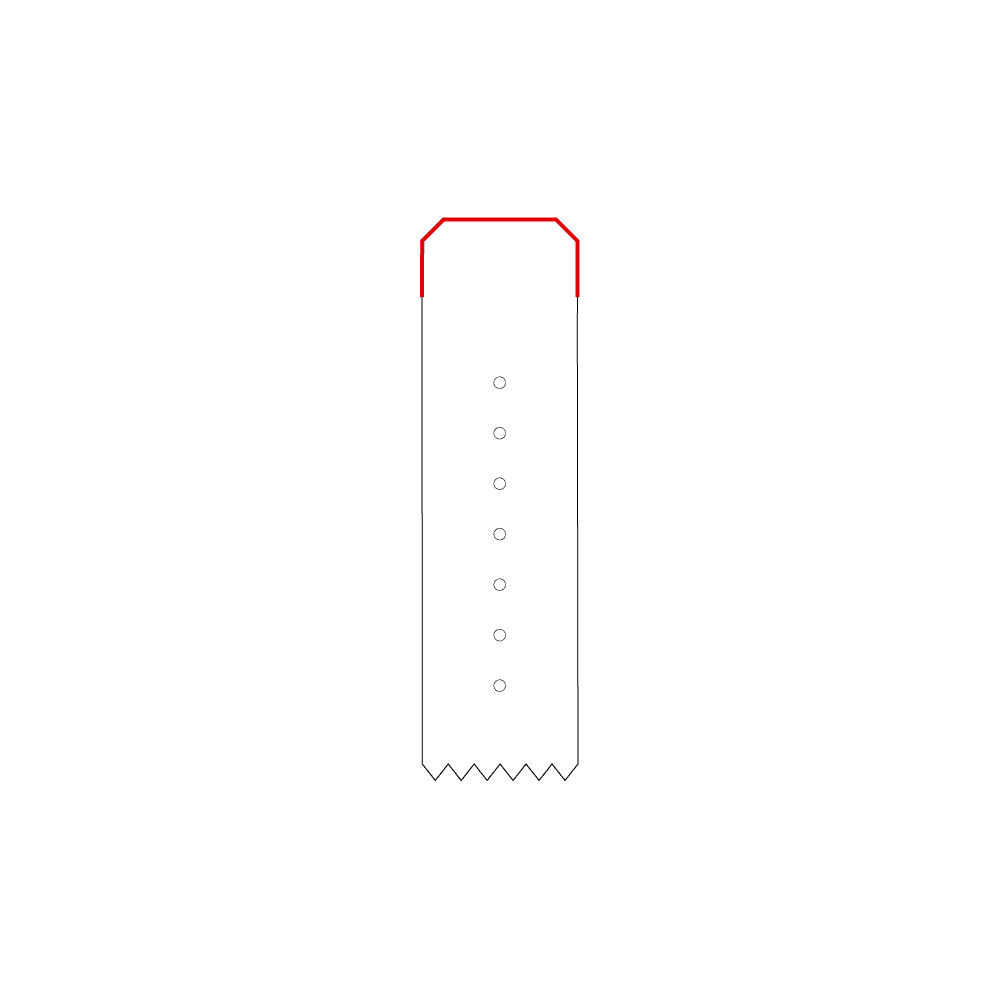
Chamfered
The Chamfered profile introduces a more geometric interpretation of the strap end.
Instead of a continuous curve, its upper corners are cut at an angle, creating a short, flat central section connected to the sides through defined transitions.
This gives the strap a more structured silhouette, combining straight lines with carefully considered angles.
The result feels particularly appropriate for watches with more architectural cases, angular details or contemporary design language.
Chamfered offers an interesting balance between traditional craftsmanship and modern geometry. It is distinctive without being excessively expressive, making it a compelling choice for collectors who appreciate clean lines and well-defined proportions.
Choose Chamfered if you appreciate:
- Geometric shapes and defined transitions.
- A structured, contemporary appearance.
- Subtle angular detailing.
- A distinctive alternative to rounded profiles.
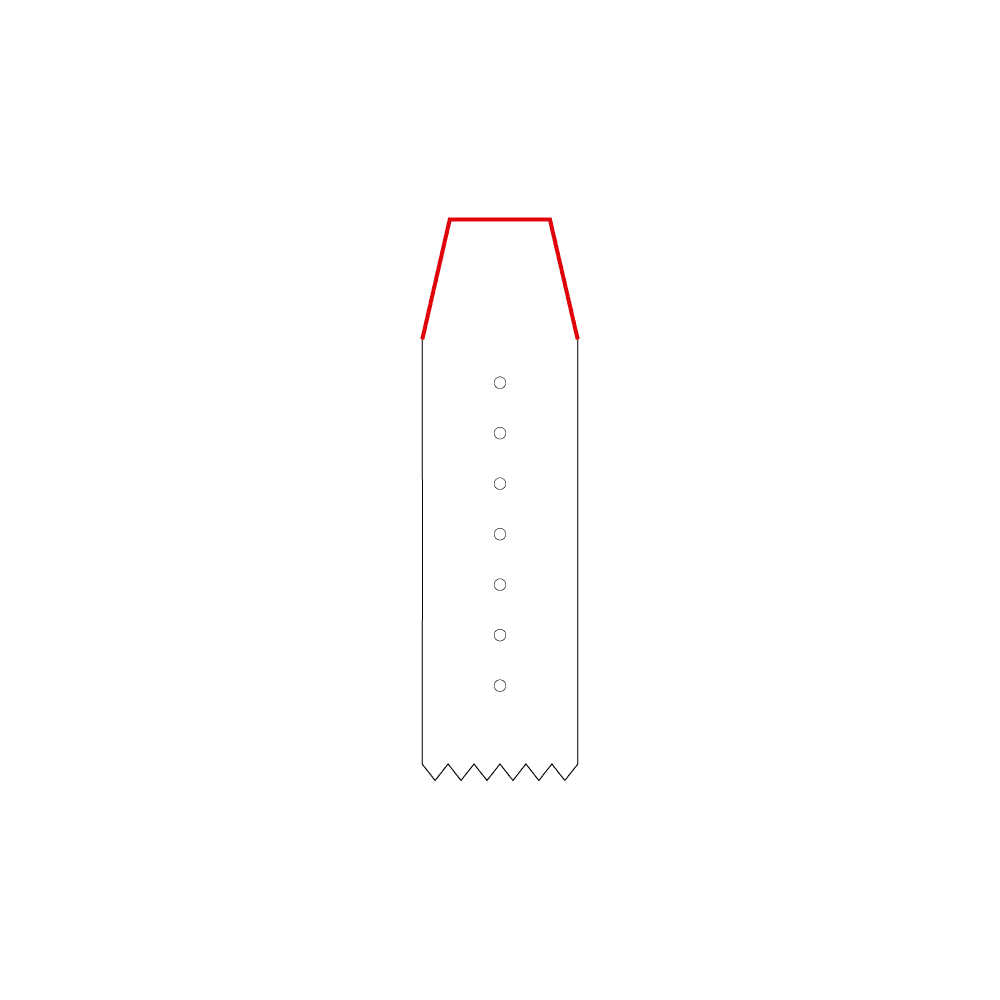
Trapezoid
The Trapezoid profile is the most distinctly geometric of the four options.
Its upper section is defined by a short, flat edge connected to the sides through diagonal lines, creating a trapezoidal silhouette.
Compared with the softer transitions of Ogive and Rounded, this profile introduces a stronger visual contrast. Its angular construction gives the strap a more deliberate and architectural appearance.
It can be particularly interesting when paired with watches that already incorporate geometric elements in their cases, bezels or dial design.
The Trapezoid profile is also an appealing option for those who prefer a more contemporary interpretation of a traditional leather strap.
Choose Trapezoid if you appreciate:
- Strong geometric lines.
- Angular and contemporary design.
- A more pronounced silhouette.
- A distinctive relationship between the strap and the watch case.
3. Understanding the Differences
Although all four profiles serve the same purpose, their visual character is quite different.
Ogive and Rounded share softer, curved lines, but their overall impressions are not the same. Ogive introduces a central point, while Rounded creates a continuous semicircular finish.
Chamfered and Trapezoid, on the other hand, rely more heavily on straight lines and angular transitions.
The distinction between these two lies in their proportions: Chamfered retains a relatively short, flat upper section with clipped corners, whereas Trapezoid creates a more pronounced trapezoidal outline through its sloping sides.
A useful way to think about the four options is:
- Ogive: Curved, pointed and distinctive.
- Rounded: Soft, symmetrical and timeless.
- Chamfered: Structured, balanced and geometric.
- Trapezoid: Angular, contemporary and expressive.
None is inherently better than another. They simply offer different ways of interpreting the same fundamental component.
4. Matching Strap Ends to Your Watch
Choosing the right profile becomes easier when you consider the overall design language of your watch.
Rather than looking at the strap in isolation, consider the relationship between its silhouette and the case.
For Classic and Dress Watches
Traditional dress watches often benefit from softer profiles.
Rounded is a natural choice when seeking a discreet and harmonious appearance. Ogive can also work beautifully when a slightly more distinctive interpretation is desired.
Both allow the strap to complement the watch without introducing excessive visual weight.
For Vintage Timepieces
Vintage watches often have distinctive proportions and design details that deserve careful consideration.
Rounded offers a familiar, period-conscious appearance, while Ogive can introduce a subtle sense of character.
The choice will depend on the particular watch and whether you want to preserve its understated character or introduce a slightly more individual detail.
For Contemporary Watches
Modern watches frequently incorporate sharper lines, more pronounced case geometries and contrasting surfaces.
Chamfered and Trapezoid can complement these characteristics particularly well, creating a visual connection between the architecture of the case and the outline of the strap.
For Watches with Distinctive Case Shapes
When working with watches that already have unusual proportions or recognisable silhouettes, the strap end deserves even more attention.
The objective is not necessarily to reproduce the geometry of the case, but to create a balanced transition between the two elements.
Sometimes a contrasting profile works beautifully. On other occasions, a softer outline provides precisely the balance the watch needs.
5. The Relationship Between Strap Ends and Leather
The leather itself also influences how a particular profile is perceived.
Different materials have different textures, grain patterns and visual personalities. Consequently, the same strap end can create a different impression depending on the leather selected.
With Alligator leather, the natural scale pattern already provides considerable visual interest. A Rounded or Ogive profile can complement its traditional elegance, while Chamfered offers an interesting contemporary interpretation.
With Epsom leather, the regular embossed grain and structured appearance can work particularly well alongside the defined lines of Chamfered or Trapezoid.
Pueblo leather offers a more organic character, with its natural texture and evolving patina. Softer profiles such as Rounded and Ogive can complement this relaxed aesthetic, although a geometric finish can create an appealing contrast.
Finally, Lizard leather has a distinctive, fine-scale texture that often lends itself to elegant and carefully proportioned designs. Ogive and Rounded are particularly interesting options when seeking a more traditional appearance.
These are starting points rather than strict rules. One of the pleasures of choosing a custom strap is discovering combinations that work precisely because they are unexpected.
6. Choosing a Profile: A Matter of Proportion
One of the most important considerations when selecting a strap end is proportion.
The profile should feel appropriate for the dimensions of the watch, the width of the strap and the overall character of the design.
A highly geometric finish may look particularly attractive on a watch with angular case details, while a softer profile may create a more natural transition on a traditional round case.
However, design is rarely governed by absolute rules.
A classic watch can sometimes benefit from a more contemporary strap profile, just as a modern timepiece can look surprisingly elegant with a traditional silhouette.
The important thing is to consider the watch as a complete composition.
The case, dial, hands, leather, stitching and strap end should all contribute to a coherent result.
7. Strap Ends as Part of the Complete Design
A watch strap is made up of several elements that work together to determine its final appearance.
The leather establishes its texture and character.
The colour defines its visual identity.
The stitching introduces definition and rhythm.
The padding influences its thickness and overall profile.
The strap end determines how the leather meets the watch case.
Each decision contributes something different, but none should be considered entirely in isolation.
For example, a black Alligator strap with a Rounded profile, matching stitching and slim padding will create a very different impression from a Pueblo strap with a Trapezoid profile, contrasting thread and a more substantial construction.
Both can be equally successful. Their appeal simply comes from different combinations of materials and design decisions.
This is what makes the process of creating a custom watch strap so interesting: a relatively small number of carefully selected details can produce remarkably different results.
8. Explore Custom Watch Straps
For collectors who have a particular watch, leather or design in mind, customisation offers the opportunity to consider these details individually.
At Roiberd Atelier, the available strap end profiles are Ogive, Rounded, Chamfered and Trapezoid, allowing you to choose the silhouette that best complements your timepiece.
Combined with your preferred leather, stitching pattern, thread colour and padding style, these options provide the foundations for a strap that reflects your own preferences.
If you would like to explore the available configurations, discover the possibilities through the Custom Watch Straps service.
Final Thoughts
It is easy to overlook the shape of a watch strap’s end.
After all, it occupies only a small portion of the overall design. Yet, like so many details in traditional craftsmanship, its influence becomes apparent when everything is considered together.
A pointed curve, a smooth semicircle or a carefully defined angle can subtly change the way a strap relates to the watch it accompanies.
Ogive, Rounded, Chamfered and Trapezoid each offer a different interpretation of this small but meaningful detail.
There is no universal answer to which one is best. The right choice is the one that feels naturally connected to the proportions and personality of your timepiece.
Because the beauty of a well-considered watch strap lies not in any single detail, but in the way every element comes together.
Sometimes, the smallest changes make the greatest difference.
Craftsman’s Note
When designing a strap, it is tempting to concentrate on the leather and colour first. Yet the outline is equally important.
A carefully chosen profile can make the entire strap feel more balanced, even when the difference between two options is only a matter of a few millimetres or a slightly different curve.
These are the details that rarely demand attention, but often make the finished piece feel complete.