

Few details on a watch strap are as subtle, and as influential, as its stitching.
At first glance, stitching may seem purely functional: the thread holds the different layers of leather together and helps give the strap its structure. Yet the way those stitches are arranged can have a surprisingly strong effect on the character of the finished strap.
A more discreet pattern can allow the leather and the watch itself to take centre stage. A more pronounced construction can introduce definition and visual structure. Small changes in the placement of the stitching can make the same leather feel more formal, more contemporary, or more distinctive.
This is particularly noticeable when creating a custom watch strap, where details such as leather, colour, padding, strap ends and stitching can all be considered individually.
At Roiberd Atelier, four stitching patterns are available for custom watch straps: Minimal, Full (Standard), Closed and Boxed. Each has its own visual character, and understanding the differences makes it easier to choose the one that best complements your watch and the aesthetic you have in mind.
1. Why Stitching Matters on a Watch Strap
Stitching serves an essential structural purpose, but its visual role should not be underestimated.
The thread creates a subtle line around the leather, defining its shape and establishing a visual relationship between the strap and the watch case. Depending on how much stitching is visible, the strap can appear more understated or more deliberately constructed.
This becomes particularly interesting when different colours are involved.
A thread that closely matches the leather creates a quiet, almost seamless appearance. Contrasting thread, on the other hand, makes the stitching itself part of the design.
Neither approach is inherently better.
The right choice depends on what you want the strap to express.
A minimalist dress watch may benefit from stitching that quietly recedes into the background, while a more casual or characterful watch can carry a more pronounced pattern with ease.
This is why stitching should be considered alongside the leather, colour and proportions of the strap rather than as an isolated detail.
2. The Four Roiberd Stitching Patterns
Minimal
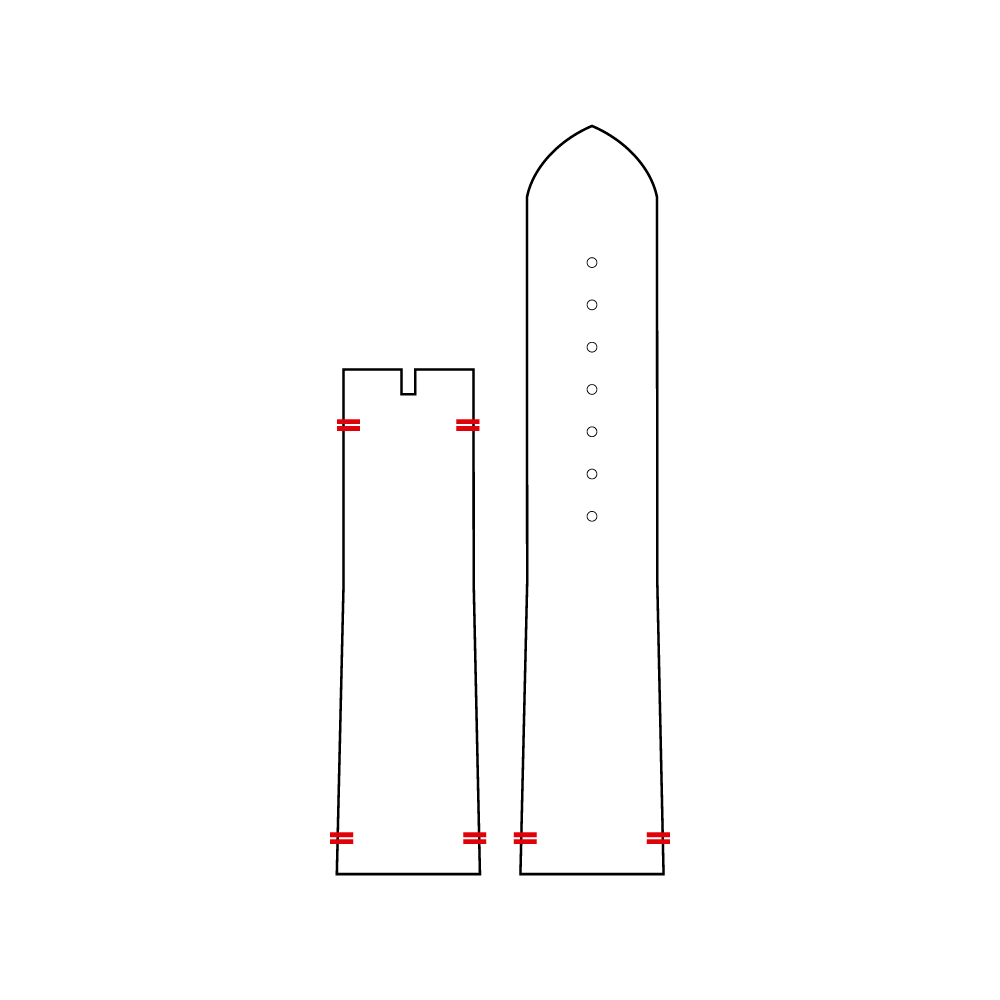
As its name suggests, Minimal is the most restrained of the four patterns.
The stitching is deliberately reduced to the essential points of construction, leaving large areas of the leather uninterrupted. The result is an exceptionally clean appearance in which the material itself becomes the focus.
This pattern works particularly well when you want the strap to feel refined and understated, especially with leathers whose own texture or finish provides enough visual character.
It can be an excellent choice for elegant watches where excessive detailing might distract from the dial or case.
Choose Minimal if you want:
- A clean and discreet appearance
- The leather to remain the visual focus
- A particularly understated aesthetic
- A refined companion for an elegant or minimalist watch
Minimal is perhaps the clearest example of how less can sometimes say more.
Full (Standard)
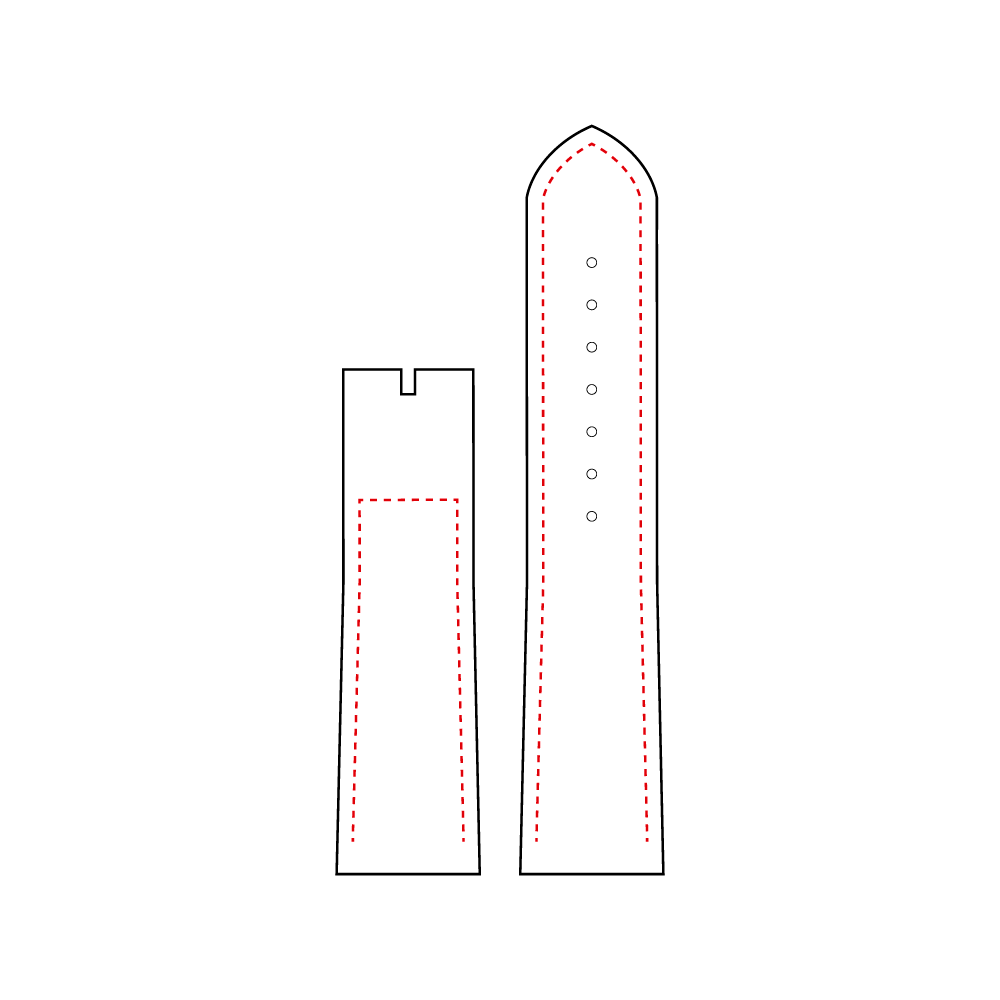
Full, also referred to as the Standard pattern, is the most traditional and visually familiar of the four options.
The stitching follows the main perimeter of the strap, creating a clearly defined outline around the leather. This gives the strap a more structured appearance while retaining the balanced proportions associated with a classic leather watch strap.
It is a particularly versatile choice because it works naturally across a wide variety of leathers, colours and watch styles.
If you are looking for a timeless configuration and are unsure which pattern to choose, Full (Standard) is the natural starting point.
Choose Full (Standard) if you want:
- A traditional watch strap appearance
- Clearly defined edges
- A balanced and versatile design
- A pattern that works across formal and everyday watches
It is the pattern that feels immediately familiar and perhaps for that very reason, one that is unlikely ever to look out of place.
Closed
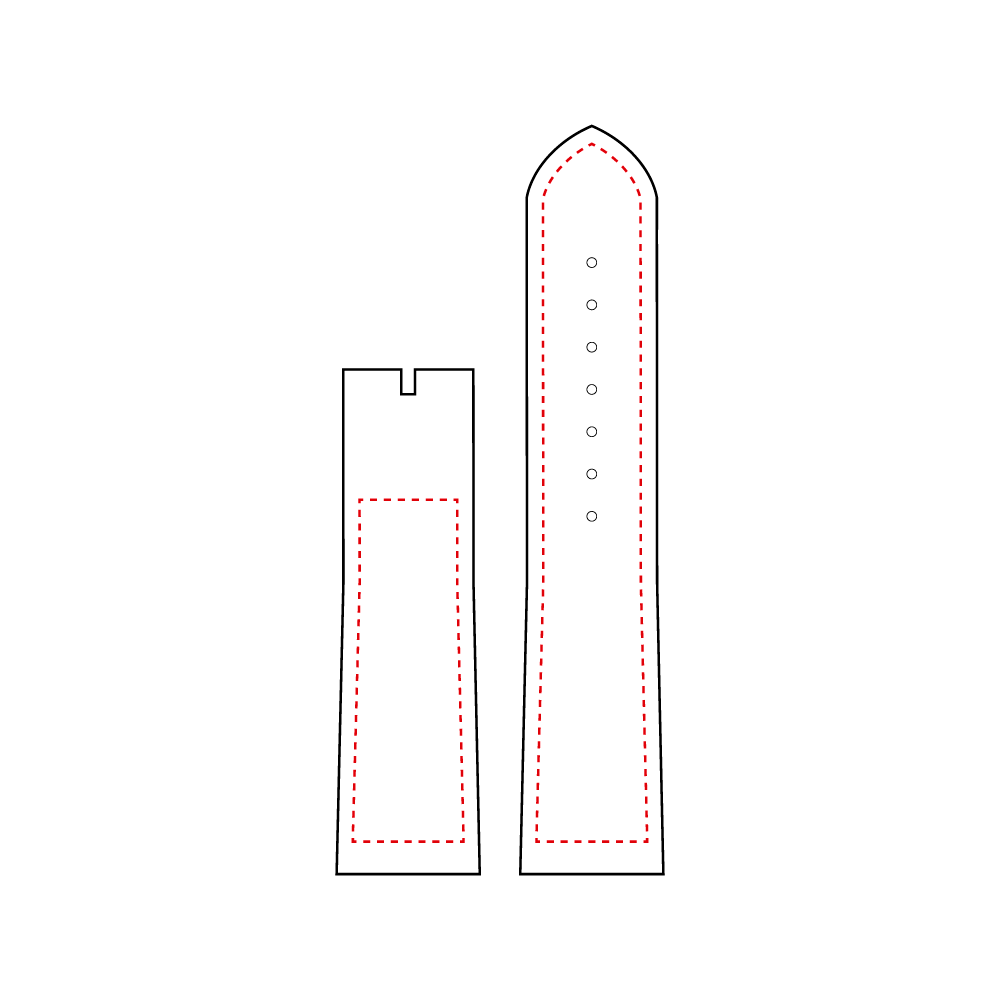
The Closed pattern introduces a different visual rhythm.
Here, the stitching creates a more enclosed treatment of the strap’s construction, giving greater definition to the areas where the leather layers meet. Compared with the Minimal pattern, there is considerably more visible stitching; compared with the Standard pattern, its arrangement creates a more distinctive visual impression.
This makes Closed particularly interesting when the stitching itself is intended to contribute to the identity of the strap rather than simply outline it.
It can work especially well when combined with a contrasting thread, although a matching thread creates a considerably more discreet result.
Choose Closed if you want:
- More visible stitching
- Greater definition around the construction
- A distinctive alternative to the traditional pattern
- The stitching to play a more noticeable role in the design
Boxed
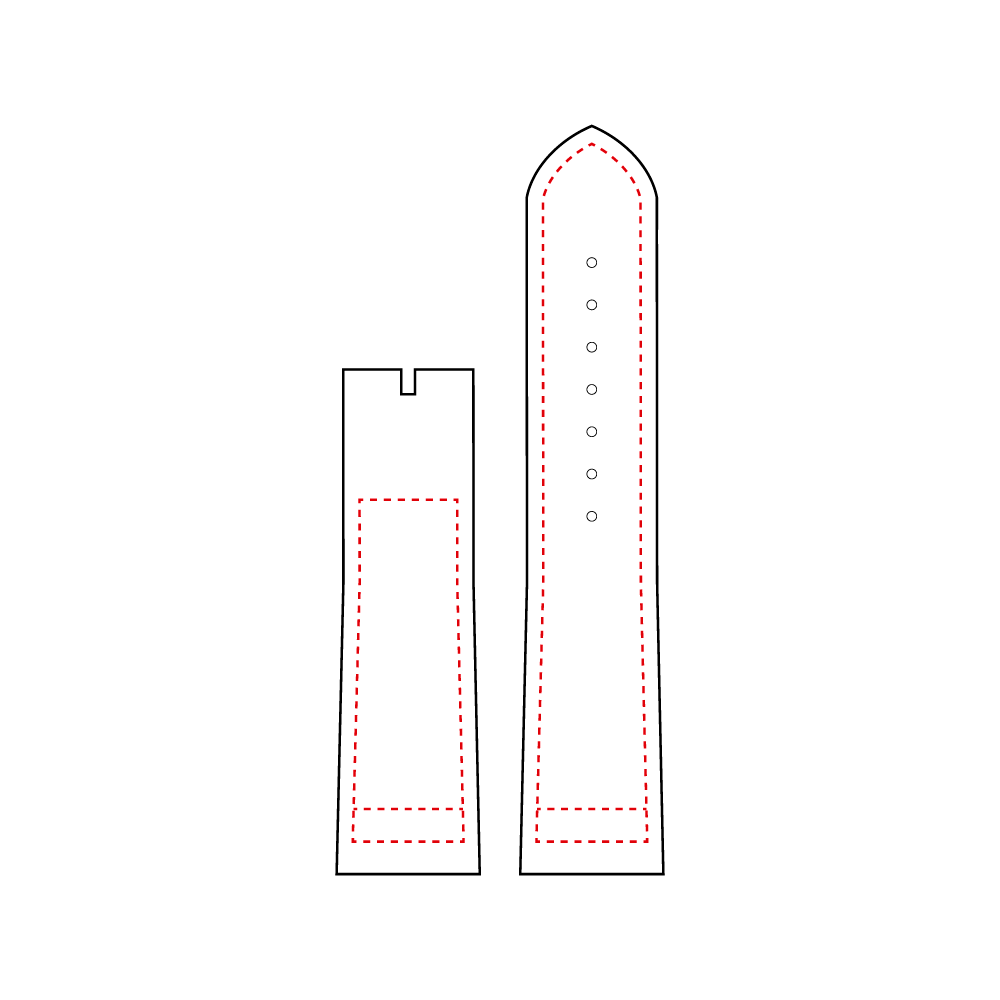
The Boxed pattern is the most visually structured of the four.
In addition to the perimeter stitching, the pattern introduces an additional horizontal element that creates a characteristic boxed appearance. This adds visual weight and makes the construction itself part of the design.
It is therefore particularly suited to those who want a strap with a little more presence and a more deliberate handcrafted character.
As with all four patterns, the final impression will also depend heavily on the leather and thread colour. On a dark leather with matching thread, the Boxed pattern can remain relatively discreet; with contrasting thread, its geometry becomes much more apparent.
Choose Boxed if you want:
- A more pronounced stitching design
- Additional visual structure
- A distinctly handcrafted appearance
- The stitching to become an intentional design feature
A First Comparison
The four patterns can therefore be thought of as different points along a spectrum:
Minimal
Quiet · Refined · Discreet
Full (Standard)
Classic · Balanced · Versatile
Closed
Defined · Distinctive · Detailed
Boxed
Structured · Characterful · Expressive
There is no objectively superior pattern.
The most appropriate choice depends on the watch, the leather, the colour and, ultimately, how visible you want the construction of the strap to be.
Craftsman’s Note
Stitching is one of those details that is easy to overlook when choosing a strap from a distance. Once the strap is on the wrist, however, the eye naturally begins to notice the small lines, proportions and transitions that define its construction.
For that reason, I tend to think of stitching not simply as something that holds a strap together, but as part of its visual architecture.
3. Choosing the Right Stitching Pattern
Choosing a stitching pattern is ultimately a matter of balance.
The same pattern can look remarkably different depending on the leather, colour, thread and watch it accompanies. A Minimal stitch in black alligator may feel almost architectural, while the same restrained approach in Pueblo leather can take on a much more relaxed character.
Rather than thinking of the four patterns as better or worse alternatives, it is more useful to consider the impression you want the finished strap to create.
For a discreet and refined appearance
If you want the leather itself to take centre stage, Minimal is the natural choice.
Its reduced stitching allows the surface, grain and colour of the leather to remain uninterrupted. This can be particularly effective with refined leathers such as Alligator or Lizard, where the natural texture already provides considerable visual interest.
It is also a compelling option for slim dress watches and understated vintage pieces.
For a timeless, versatile strap
Full (Standard) is perhaps the easiest pattern to live with.
Its familiar outline provides definition without becoming overly expressive, making it suitable for almost any watch that traditionally calls for a leather strap.
It works equally well with formal and everyday watches and is particularly useful when you want the strap to feel classic rather than distinctive.
For a first custom strap, it is also an excellent starting point.
For a more distinctive construction
If you want the stitching to be more noticeable without making it the dominant feature of the strap, Closed offers an interesting middle ground.
The additional definition gives the strap a more considered appearance, particularly when paired with a contrasting thread.
This can work beautifully with both traditional and contemporary watches, depending on the rest of the configuration.
For a stronger visual statement
Boxed is the most expressive of the four patterns.
Its additional horizontal stitching introduces another visual element to the strap, creating a more structured and distinctive appearance.
It can be particularly effective when you want the construction of the strap itself to become part of its personality. With a contrasting thread, the geometry becomes even more apparent; with a matching thread, the result is considerably more restrained.
A Simple Way to Decide
If you are unsure which pattern to choose, start by asking yourself how much visual attention you want the stitching to receive.
Let the leather speak → Minimal
Choose a timeless classic → Full (Standard)
Add definition → Closed
Make the construction part of the design → Boxed
There is no wrong answer. The most successful configuration is simply the one that creates the right relationship between the watch, the leather and the details of the strap.
4. Matching the Stitching to the Leather
Stitching should not be considered independently from the leather it accompanies.
Every leather has its own texture, depth and visual character, and the stitching can either complement those qualities or deliberately contrast with them.
Alligator
Alligator leather already has a distinctive natural scale pattern, so the stitching can be used to establish a more restrained overall appearance.
A matching thread allows the scales and colour of the leather to remain the primary focus. A contrasting thread introduces another visual layer and can make the construction of the strap more apparent.
For particularly formal watches, a discreet pattern and matching thread can create an exceptionally elegant result.
Epsom
The structured grain of Epsom leather provides a very different canvas.
Because the surface is regular and consistent, more defined stitching patterns can work particularly well without making the strap feel visually excessive.
A matching thread creates a clean, contemporary appearance, while contrasting stitching can emphasise the geometric character of the leather.
Pueblo
Pueblo leather is perhaps the most naturally expressive of the four leathers.
Its softly textured surface and evolving patina already give the strap considerable personality. For this reason, a restrained stitching pattern can allow the leather to remain the focus.
On the other hand, a more pronounced pattern can create an appealing contrast with Pueblo’s organic appearance, particularly on casual or vintage-inspired watches.
As the leather develops its patina, the relationship between the thread and the leather can become even more interesting.
Lizard
Lizard leather has a naturally fine and regular scale structure, giving it a more delicate visual character.
A discreet stitching treatment can emphasise this elegance, particularly on smaller dress watches and vintage pieces. More visible stitching, however, can create an intriguing contrast and give the strap a more contemporary interpretation.
As with Alligator, the most successful combinations often come from allowing the leather’s natural texture to remain the principal visual element.
5. Matching Thread Colour: Subtle or Contrasting?
Once the stitching pattern has been chosen, there is another deceptively small decision to make: the colour of the thread.
It is a detail that can completely change the appearance of a strap.
Matching Thread
When the thread closely matches the colour of the leather, the stitching becomes part of the overall construction rather than a separate visual element.
This creates a quieter and more sophisticated appearance, allowing the leather, watch case and dial to take precedence.
Matching thread is particularly effective when the goal is a refined or formal strap.
It can also be an excellent choice when using a leather with a strong natural texture, where adding a contrasting thread might create unnecessary visual competition.
Contrasting Thread
Contrasting thread takes the opposite approach.
Rather than allowing the stitching to disappear into the leather, it deliberately draws attention to the construction of the strap.
This can highlight the shape of the stitching pattern, emphasise the craftsmanship and give a more casual or expressive character to the finished piece.
A contrasting thread can be particularly effective with Pueblo and Epsom, where the structured or textured surface of the leather creates an interesting relationship with the thread.
It Doesn’t Have to Be Dramatic
Contrast does not necessarily mean choosing two completely opposing colours.
A subtle difference in tone can be enough to make the stitching visible while maintaining an elegant appearance.
For example, a slightly lighter brown thread on dark brown leather may provide definition without creating the visual impact of a much brighter colour.
This is often where the most sophisticated combinations can be found: enough contrast to reveal the craftsmanship, but not so much that the stitching overwhelms the watch.
Collector’s Tip
If you are unsure about thread colour, look at the watch itself for inspiration.
The colour of the hands, hour markers, case or even a small detail on the dial can provide a natural reference point. Repeating one of these subtle tones in the stitching can create a surprisingly cohesive result without requiring the thread to match the leather.
6. Stitching as Part of the Complete Strap
A stitching pattern is only one element of a much larger composition.
The final character of a custom strap is created by the relationship between several details:
Leather determines texture and character.
Colour establishes the overall mood.
Padding influences thickness and presence.
Strap ends determine how the strap meets the watch case.
Stitching defines the construction and adds visual rhythm.
Thread colour determines how visible that construction becomes.
None of these decisions exists in isolation.
A Minimal pattern in black Alligator with matching thread and slim padding will create a very different impression from a Boxed pattern in Pueblo with contrasting thread and a thicker profile, even if both straps are made for the same watch.
This is what makes customisation so interesting.
The possibilities do not come from an endless number of decorative details. They come from combining a relatively small number of carefully considered elements in different ways.
7. A Thoughtful Approach to Customisation
The temptation when designing a custom strap is to make every element distinctive.
A particularly unusual leather, a bold colour, contrasting thread, a pronounced stitching pattern and a substantial padded profile can all be appealing individually. Together, however, they may compete for attention.
The most successful custom straps often take a more considered approach.
Choose one or two elements to express personality and allow the others to provide balance.
For example, an unusual leather colour can remain the focus when paired with understated stitching. Alternatively, a classic black strap can acquire a more distinctive character through a contrasting thread or a more expressive stitching pattern.
The objective is not to make every detail noticeable.
It is to make every detail belong.
Craftsman’s Note
When I look at a finished strap, I don’t think of the stitching as something added to the leather. I think of it as one part of a larger composition.
The best configurations are rarely those in which every detail demands attention. They are the ones in which leather, colour, proportions and stitching seem to have been chosen together from the beginning.
8. Explore Custom Watch Straps
For those who already have a particular watch, leather or colour in mind, a custom strap offers the opportunity to bring these individual elements together.
Rather than choosing from a predefined combination, you can consider details such as leather, colour, stitching pattern, thread and proportions to create a strap designed specifically around your watch and preferences.
The four stitching patterns described in this guide; Minimal, Full (Standard), Closed and Boxed, are part of that process.
If you are considering a custom strap, you can explore the available options and begin building your own configuration through the Custom Watch Straps service.
Final Thoughts
Stitching may be one of the smallest details on a watch strap, but it can have a surprisingly profound effect on its character.
A Minimal pattern can allow beautiful leather to speak quietly. A Full (Standard) pattern can provide the familiar proportions of a timeless watch strap. Closed can introduce greater definition, while Boxed can make the construction itself part of the design.
Then there is thread colour, which can either allow those details to disappear into the leather or deliberately bring them forward.
None of these choices is inherently better than another.
The beauty lies in finding the combination that feels right for the watch, the leather and the person wearing it.
Because ultimately, a custom watch strap is not about adding as many choices as possible. It is about making a small number of thoughtful decisions, and making sure that, when they come together, every detail belongs.